

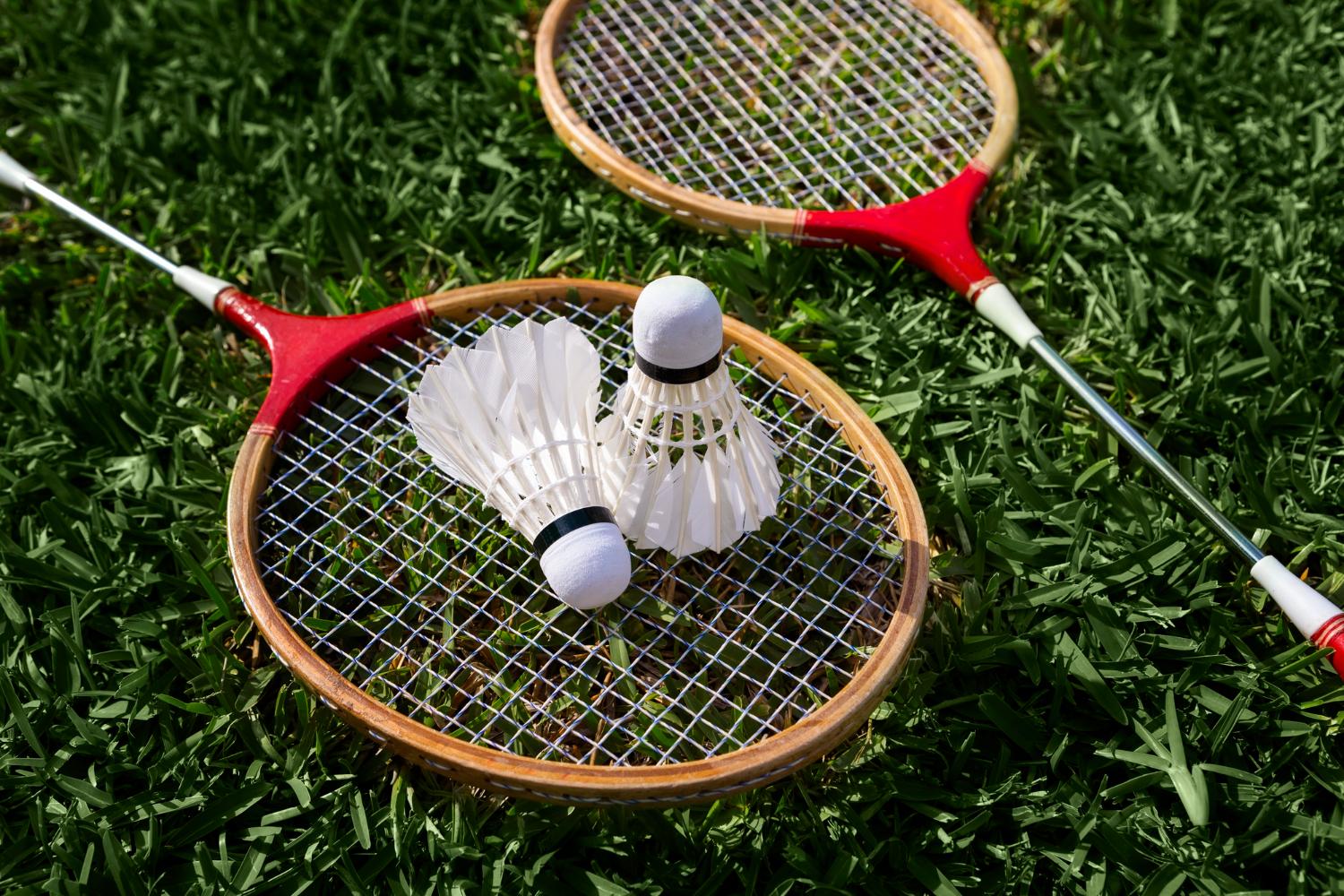
There’s a reason badminton never truly disappears from backyards, school ovals, and community parks — even as trendier activities come and go. It doesn’t demand peak fitness. It doesn’t require expensive coaching. And yet somehow, a good rally between two evenly matched players produces the same competitive electricity as something far more serious. Badminton sets tend to sit quietly in garages until someone pulls them out — and then suddenly nobody wants to go inside.
The Fitness Payoff Is Sneaky
Here’s something most casual players never realise. Badminton places unusually high demands on fast-twitch muscle fibres — the same fibres responsible for explosive speed and rapid directional change. These fibres deteriorate faster with age and are notoriously difficult to train through conventional exercise. A hard badminton session targets them naturally, almost incidentally, while the player’s brain stays completely occupied with the game itself. The body gets worked. The mind never registers it as effort.
It Fixes Awkward Social Gatherings
Shared mild failure is one of the most effective human bonding mechanisms that exists. Badminton delivers it constantly — the shuttlecock that clips the net, the overhead smash that sails embarrassingly wide, the easy return somehow shanked into the ground. These small, witnessed failures create genuine laughter between people who might otherwise struggle to connect. A net in the backyard often does more social work than the food and drinks combined.
Children Actually Improve Fast
What badminton quietly teaches children that most parents overlook is spatial prediction — the ability to read where a moving object is heading before it arrives. That skill underpins reading comprehension, mathematics, and athletic development across many disciplines. Kids who play regularly develop it without any instruction. They’re just trying to return the shuttlecock. The neurological groundwork gets laid without anyone deliberately trying to lay it.
The Mental Workout Goes Unnoticed
A badminton rally lasting longer than a few exchanges requires continuous probabilistic thinking. Every shot narrows the opponent’s likely responses. Every position on the court opens certain angles and closes others. Experienced players process this instinctively, but even beginners are training that pattern recognition without realising it. The game builds analytical thinking through repetition, disguised entirely as recreation.
Setup Frustration Is Largely Avoidable
The graveyard of abandoned badminton sets in sheds across the country shares a common story. Flimsy poles that refuse to stay vertical, nets that belly downward within a single game, shuttlecocks that disintegrate after light use — these aren’t minor inconveniences. They kill momentum. Once the equipment frustrates players enough times, the set gets packed away and never returns. The quality of the initial purchase determines whether badminton becomes a lasting habit or a forgotten experiment.
Conclusion
Badminton earns its place in a backyard not because it’s simple, but because it’s deceptively deep. The fitness rewards arrive without feeling like punishment. The social dynamics it creates are difficult to replicate through conversation alone. The mental sharpness it develops happens below conscious awareness. Most households already have the space. Most already have the occasional gathering that could use exactly this kind of energy. Badminton sets provide the missing piece — and once they’re up, the backyard stops being somewhere people pass through and starts being somewhere they actually stay.